
Connie’s Personal Transformation
Lady Chatterley's LoverThis flow traces Connie’s changing self-understanding as she moves from abstract freedom and habitual duty toward a more embodied form of agency.
increasing Bearing strength in each event
 decreasing
Bearing strength in each eventdecreasingThe Free Girl

The Free Girl
Freedom through thought
Connie and Hilda grow up among artists, political discussion, and student life. For Connie, passionate conversation becomes the chief means of connection with young men.
Sex appears to her as something a woman may grant without surrendering her inward independence. This model gives her a sense of control but also limits her encounter with physical desire.
An inherited contradiction
Connie experiences the sexual act as a sensation and a kind of self-assertion. Her early ideal of freedom depends on remaining untouched at the level she values most.
That contradiction helps explain why later marriage and affairs can leave her dissatisfied. The novel’s central change begins with the breakdown of this separation between selfhood and bodily life.
The Decline of Vitality
The Decline of Vitality
Service without reciprocity
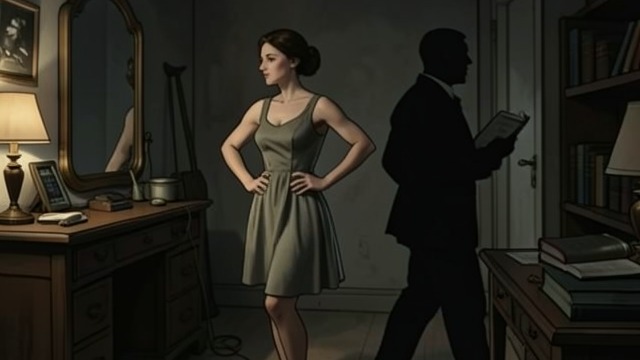
Connie gives much of her time to Clifford’s needs and literary work. She does so willingly at first, but the continual focus on his thoughts leaves her increasingly detached from her own body.
Her walks and household duties do not restore the vitality she is losing. She feels that her life is becoming an appearance maintained by words and social roles.
A bodily warning
Connie grows thin, restless, and frightened by the sense that nothing is happening. Her body signals a crisis that neither her marriage nor Clifford’s account of their shared life can resolve.
The change is not a sudden rejection of duty. It is the gradual discovery that duty has become a substitute for a living relationship and a life she can call her own.
Choosing a New Life
Choosing a New Life
A claim to desire
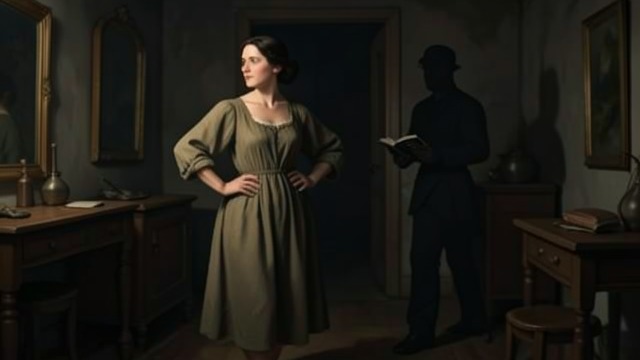
After pregnancy and the scandal, Connie reunites with Mellors in London. She states plainly that she wants to live with him, even though he fears having no independent livelihood or social standing to offer.
Connie identifies his tenderness as a value that outweighs the security of Wragby. Her choice is increasingly an act of self-responsibility rather than a search for an idealized romantic rescue.
Agency without guarantee
Connie confesses her love for Mellors to Clifford and refuses the life he offers under his roof. He will not divorce her, yet she leaves with Hilda rather than remain in a marriage she no longer chooses.
Her new life is not secured by the novel’s conclusion. Connie’s transformation lies in choosing it despite uncertainty, rather than in having every obstacle removed.
In Connie’s youth, before her marriage
During the years of Connie’s life at Wragby
From the London reunion to Connie’s departure from Wragby
